Abdominal pain, vomiting, jaundice or bleeding can involve organs ranging from the oesophagus to the colon, and the right treatment may be medicine, endoscopy or surgery. Use the guide below to identify the specialist you need, recognise emergencies, understand the testing pathway and compare hospitals before treatment.
Key takeaways
- Call emergency services for severe pain, repeated vomiting, fainting or a rigid abdomen.
- A gastroenterologist usually evaluates digestive disease; a gastrointestinal surgeon performs operations.
- Endoscopy, ultrasound or CT comes before choosing medicine, endoscopy or surgery.
- Ask about laparoscopic, robotic and open techniques, intensive care and 24-hour emergency support.
What gastrointestinal surgery covers—and which specialist you need
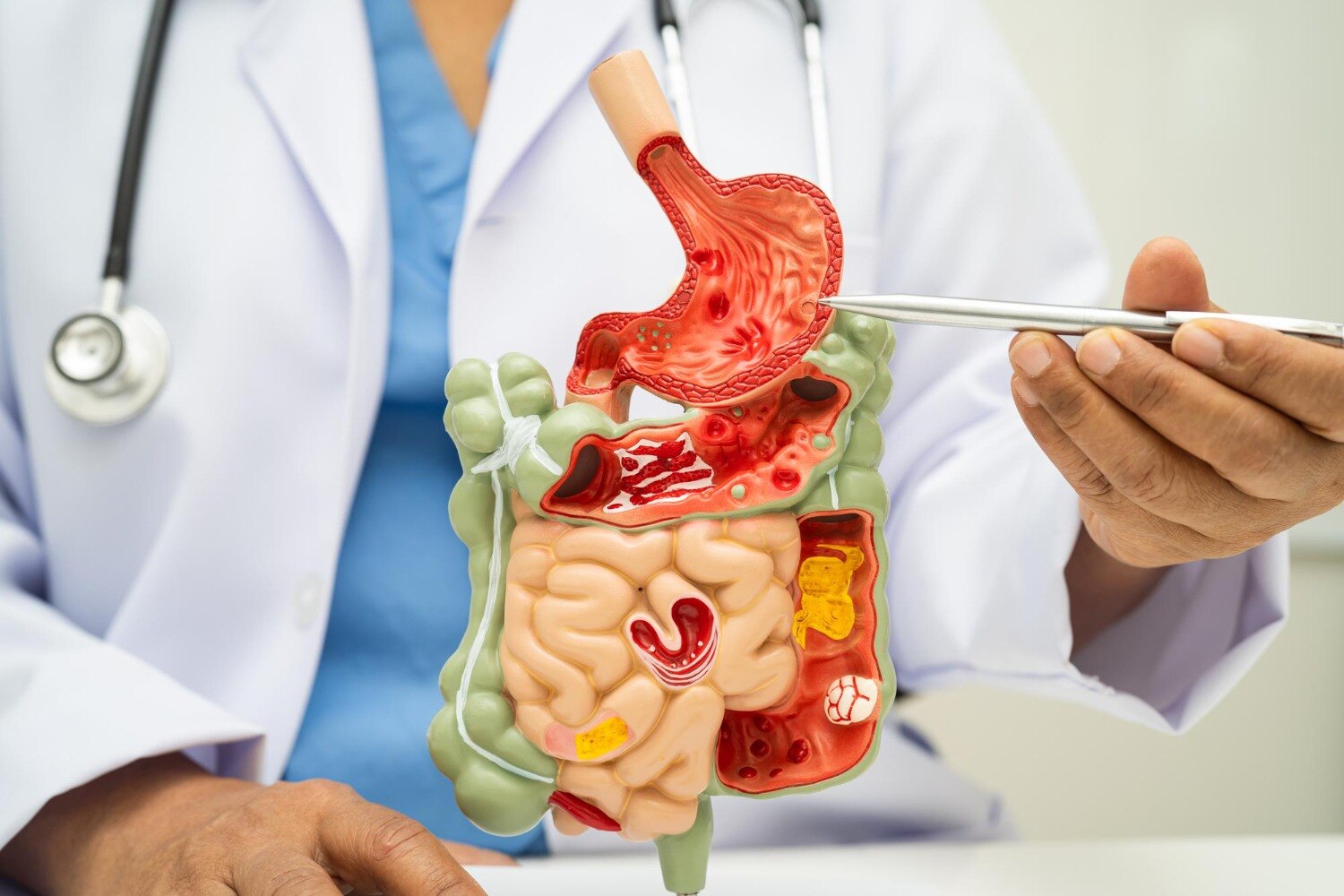
Gastrointestinal surgery treats disease or injury affecting the oesophagus, stomach, small intestine, colon, rectum, anus, gallbladder, bile ducts, liver and pancreas. Operations range from removing an inflamed appendix or gallbladder to repairing a hernia, relieving bowel obstruction, removing a colorectal tumour or treating an abdominal mass.
A gastrointestinal surgeon assesses conditions such as appendicitis, gallstones, diverticulitis, inflammatory bowel disease, gastrointestinal bleeding, reflux and colorectal disease when an operation might be needed. Cancer surgery also requires staging scans, endoscopic biopsy, pathology review and sometimes molecular testing; a tumour board may recommend surgery, chemotherapy, radiotherapy, immunotherapy or a combination.
| Specialist | Main role | Typical treatment |
|---|---|---|
| Gastroenterologist | Diagnoses and treats digestive disease without operating | Medicines, colonoscopy, gastroscopy, biopsy and endoscopic bleeding control |
| Gastrointestinal surgeon | Performs abdominal and digestive-tract operations | Laparoscopic, robotic or open surgery, including cancer and emergency procedures |
| General surgeon | Covers a broader surgical field | Hernia, appendix, gallbladder, bowel and soft-tissue surgery, with referral for highly specialised cases |
A gastroenterologist is the usual first specialist for persistent reflux, unexplained bleeding or inflammatory bowel disease when endoscopy or medication is appropriate. Choose a gastrointestinal surgeon when tests show obstruction, perforation, a tumour or another condition requiring surgery.
A search for general surgeon Pune may identify suitable local care, but ask who provides overnight emergency surgical cover and whether operations happen on site.
Which symptoms need emergency assessment and which tests come first
Go to an emergency department for severe or worsening abdominal pain, especially with a rigid or swollen abdomen, repeated vomiting, fainting, jaundice, or fever. This is an abdominal pain emergency when the pain is sudden, intense, or accompanied by collapse.
- Treat bowel obstruction symptoms as urgent: cramping pain, persistent vomiting, increasing bloating, and inability to pass stool or gas.
- Seek immediate care for gastrointestinal bleeding, including black, tar-like stools, maroon stools, or visible blood in vomit or stool.
- Do not drive yourself if you feel faint, confused, severely weak, or short of breath.
- Tell the clinician about previous abdominal operations, pregnancy possibility, medicines such as aspirin or warfarin, and when you last passed stool or gas.
Doctors start with your vital signs and abdominal examination, then choose tests based on the findings. No single symptom or test confirms appendicitis, obstruction, gallbladder disease, or perforation.
| Test | What it helps find | When it comes first |
|---|---|---|
| Blood tests | Infection, anaemia, dehydration, liver or pancreas problems | Most acute abdominal presentations |
| Urine test and pregnancy test | Urinary causes and pregnancy-related risks | Reproductive-age patients or urinary symptoms |
| Ultrasound | Gallstones, bile-duct dilation, pelvic causes | Suspected gallbladder disease or when avoiding radiation matters |
| CT scan abdomen | Obstruction, perforation, appendicitis, abscess, bleeding, or tumour | Severe, unclear, or worsening abdominal pain |
| Endoscopy or colonoscopy | Ulcers, active bleeding, inflammation, or bowel lesions | Suspected upper or lower gastrointestinal bleeding |
ERCP is mainly a treatment for bile-duct stones or obstruction, not a routine diagnostic scan. Ask whether overnight surgical cover, anaesthesia, imaging, blood components, and emergency operating capability are available on site.
When conditions need medicine, endoscopy or an operation
Doctors choose observation, medicine, endoscopy or surgery according to severity, complications, test results and the risk of waiting. A stable condition without obstruction, perforation, bleeding or tissue damage may be observed with follow-up. Medication treats problems such as reflux, gastritis, constipation, some infections and selected uncomplicated inflammatory conditions.
- Appendicitis: Examination, blood tests and ultrasound or CT guide the decision. Antibiotics may suit selected uncomplicated cases, but appendicitis surgery remains standard for many patients; perforation, an abscess or generalized peritonitis requires urgent surgical management.
- Gallstones: Asymptomatic stones can be observed. Recurrent biliary pain or acute inflammation usually leads to laparoscopic cholecystectomy, while jaundice or a bile-duct stone may require endoscopic treatment before gallbladder removal.
- Hernia: A small, reducible hernia with little discomfort can be monitored after medical review. Increasing pain, vomiting, a firm lump or trapped bowel requires urgent assessment; planned hernia repair prevents repeated symptoms and complications.
- Bleeding, anaemia, persistent vomiting, swallowing difficulty or suspected cancer: Endoscopy can inspect the lining, take a biopsy and sometimes stop bleeding or remove a polyp. A biopsy and staging scans determine cancer treatment, which may involve surgery, medicines, radiotherapy or a combination.
- Obstruction, perforation, dead bowel or failed non-operative treatment: Surgery becomes necessary. Bowel resection surgery removes damaged or diseased intestine and may require a temporary or permanent stoma.
Ask how quickly the facility can provide endoscopy, anaesthesia, imaging, blood components and overnight surgical care. A second opinion is sensible when the proposed operation is major or the diagnosis remains uncertain.
Laparoscopic, robotic and open gastrointestinal surgery compared
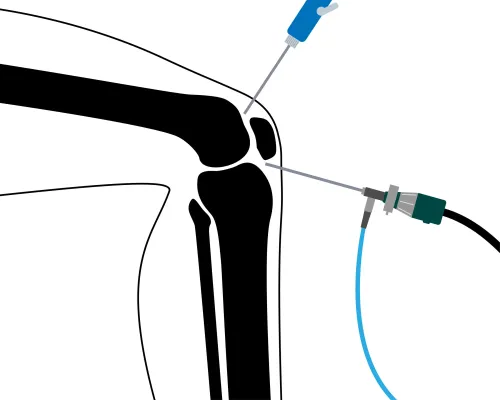
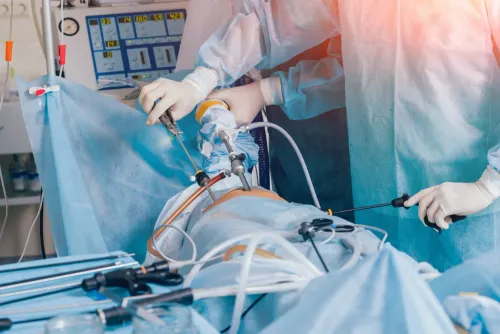
The main difference is access: laparoscopic gastrointestinal surgery and robotic surgery use several small incisions, while open abdominal surgery uses one larger incision. All three usually require general anaesthesia, but the operation, your health and the anaesthetist’s assessment determine the final plan.
| Operation | Incisions and anaesthesia | Pain, hospital stay and recovery | Safety considerations |
|---|---|---|---|
| Laparoscopic | Three to five small ports; usually general anaesthesia | Usually less wound pain, earlier movement and a shorter stay than open surgery | The surgeon may convert to open surgery for bleeding, severe inflammation, dense adhesions or unclear anatomy |
| Robotic | Several small ports controlled through a robotic system; usually general anaesthesia | Similar recovery advantages to laparoscopy, with extra equipment and operating time | Better instrument movement does not remove risks such as bleeding, infection or organ injury |
| Open | One larger incision; usually general anaesthesia | More wound pain, slower mobility and a longer stay; full recovery often takes longer | Provides direct access when disease is extensive or minimally invasive access is unsafe |
Robotic surgery is not automatically safer or better; its value depends on the procedure and the surgeon’s experience. Laparoscopic adhesiolysis, which separates internal scar bands causing obstruction or restricting movement, can become hazardous when bowel is stuck to vital structures.
Conversion is a deliberate safety decision, not automatically a surgical failure. Ask how pain will be controlled, when you can eat and walk, and what warning signs require urgent review after discharge.
How to check whether a gastrointestinal surgery hospital is equipped for your case
Do not judge a multispeciality label; ask who is physically available at night and what happens if your operation exceeds local capability. A gastrointestinal surgery hospital Dhankawadi search result is only a starting point. Use the same checklist at Pawar Multispeciality Hospital Dhankawadi, Pune.
1. Who provides overnight emergency cover? Ask whether a gastrointestinal surgeon, anaesthetist, operating theatre, ICU and diagnostic imaging are available on site, and whether emergency surgery for perforation, obstruction or uncontrolled bleeding can begin there.
2. Which endoscopy procedures are performed here? Confirm routine gastroscopy, colonoscopy and ERCP availability Pune, including after-hours cover, therapeutic procedures, biopsy handling and the clinician’s experience. Ask how the hospital monitors colonoscopy quality, such as completed examinations, bowel-preparation review and polyp detection.
3. How are gastrointestinal cancers assessed and treated? Ask whether the hospital provides staging CT or MRI, endoscopic biopsy, pathology review and molecular testing when indicated. Find out whether a multidisciplinary tumour board decides between surgery, chemotherapy, radiotherapy and immunotherapy.
4. Can you provide compatible blood components promptly? Ask specifically about packed red cells, fresh frozen plasma and platelets, including nights and weekends. A blood-storage centre is not the same as a licensed blood bank.
5. What safety process is documented? Ask whether staff use the WHO Surgical Safety Checklist before anaesthesia, before incision and before leaving the operating room, including identity, consent, allergies, antibiotics, blood-loss planning and specimen labelling.
6. If you cannot provide the required care, where will I go? Request the named receiving hospital, transport arrangement, escort, records-transfer process and responsibility for stabilisation. Verify any NABH accreditation hospital claim against the exact address and accredited scope.
Related service
General Surgery Best Piles, Fissure & Fistula Surgery Hospital in Dhankawadi, Bibwewadi, Kondhwa, Pune Are you suffering from piles (hemorrhoids), fissure, or fistula and looking for the best surgical treatment in Pune? At Pawar Multispeciality... View service → |
Frequently asked questions
What does gastrointestinal surgery treat?
It treats disease or injury involving the oesophagus, stomach, small intestine, colon, rectum, anus, gallbladder, bile ducts, liver and pancreas. Examples include appendicitis, gallstones, hernias, bowel obstruction, colorectal tumours and abdominal masses.
Which gastrointestinal symptoms need emergency assessment?
Seek urgent assessment for severe or worsening abdominal pain, repeated vomiting, blood in vomit or stool, black stools, fainting, abdominal swelling with inability to pass stool or gas, fever with marked tenderness, or a rigid abdomen.
Which specialist should evaluate a digestive condition?
A gastroenterologist evaluates many digestive conditions and performs endoscopy. A gastrointestinal or gastrointestinal-oncology surgeon assesses conditions that may need an operation. A hepatobiliary surgeon may manage complex liver, bile-duct and pancreas disease.
When is medicine, endoscopy or surgery used?
Medicine is used when symptoms respond to treatment and no structural problem needs repair. Endoscopy can diagnose disease, take a biopsy, stop bleeding or remove selected polyps. Surgery is considered for obstruction, perforation, uncontrolled bleeding, cancer, severe inflammation or disease that has not responded to other treatment.
How do laparoscopic, robotic and open gastrointestinal surgery differ?
Laparoscopic surgery uses small incisions and a camera. Robotic surgery uses computer-controlled instruments operated by the surgeon through small incisions. Open surgery uses a larger incision and remains important for extensive disease, emergencies or cases where minimally invasive surgery is unsafe.