A twisted ankle, painful knee or collision injury does not always need the same level of care. You will learn how to identify emergency warning signs, manage the first 24 hours, understand the tests and treatments a sports-injury service may offer, and judge whether you are ready to return to play.
Key takeaways
- Seek emergency care for circulation, brain, joint, or major function warning signs.
- Use ice wrapped in cloth, compression, elevation, and protected rest during the first day.
- X-rays assess bones; MRI evaluates ligaments, cartilage, tendons, and muscle injuries.
- Return to sport only after pain-free movement, restored strength, and clinician clearance.
Should you go to an emergency department or book an orthopedic appointment?
Go to an emergency department now for sports injury emergency care if the injury threatens circulation, function, the brain, or the joint. An orthopedic appointment suits injuries without these warning signs, but persistent or recurrent symptoms still need review.
- Seek emergency assessment for uncontrolled bleeding, a visible deformity, suspected fracture or dislocation, inability to bear weight, severe swelling, or a limb that is cold, pale, numb, or weak. Do not try to straighten a deformity yourself.
- Treat any head or neck injury as urgent. For a sports injury concussion, remove the athlete from play and do not allow same-day return. Worsening headache, repeated vomiting, seizure, increasing confusion, unusual drowsiness, weakness, slurred speech, or unequal pupils requires emergency care.
- Escalating pain after major trauma, a crush injury, fracture, or tightly swollen limb is an emergency when the swelling feels tense or pain increases when someone gently stretches the affected fingers or toes. Waiting for absent pulses or obvious skin changes can be dangerous.
- A hot, swollen, severely painful joint with fever may be a septic joint, not a routine sprain. It needs urgent assessment because treatment can require joint aspiration, blood tests, intravenous antibiotics, or surgical washout.
If none of these signs applies, arrange a scheduled orthopedic consultation for pain, swelling, reduced movement, weakness, giving-way, locking, night pain, or symptoms that return whenever you resume training. For an orthopedic emergency Dhankawadi search, choose an emergency department rather than waiting for an outpatient slot when any red flag appears.
What should you do during the first 24 hours?
During the first 24 hours, stop play, protect the injured area, apply suitable compression and elevation, and obtain medical advice before returning to sport. This first aid for sports injury reduces further loading while you watch for changes.
- Support the area with a brace, sling or comfortable positioning. Wrap compression evenly, not tightly; loosen it if fingers or toes become pale, blue, cold, numb or more painful.
- Elevate an injured limb above heart level when resting. Avoid massage and heat while early swelling is increasing.
- Use a cold pack for short periods through cloth only when sensation and circulation are normal. Do not ice a numb or cold limb; arrange urgent assessment instead.
- Seek prompt review for giving-way, locking, persistent swelling, weakness, reduced range of motion, night pain, or pain that returns with training. Worsening headache, repeated vomiting, confusion, unusual drowsiness, seizure, weakness, slurred speech or unequal pupils after a head impact requires emergency assessment.
Pain and swelling overlap across several injuries, so self-diagnosis is unreliable.
| Injury | Clues that can overlap | Why assessment matters |
|---|---|---|
| Muscle strain versus ligament sprain | Pain, swelling and reduced movement | Muscle injury follows overstretching; a sprain affects stabilising ligaments |
| Tendon injury | Local pain and weakness with loading | Partial tears can resemble strains |
| Dislocation | Deformity, severe pain and inability to move | The joint may need urgent reduction |
| Stress fracture | Focal pain, swelling and pain with activity | X-rays can initially appear normal |
| Meniscus injury symptoms | Joint-line pain, swelling, catching or locking | Cartilage damage can cause recurrent locking |
| Concussion | Headache, dizziness, nausea or poor concentration | Remove from play; no same-day return |
What happens during a sports-injury consultation, and which scan is needed?
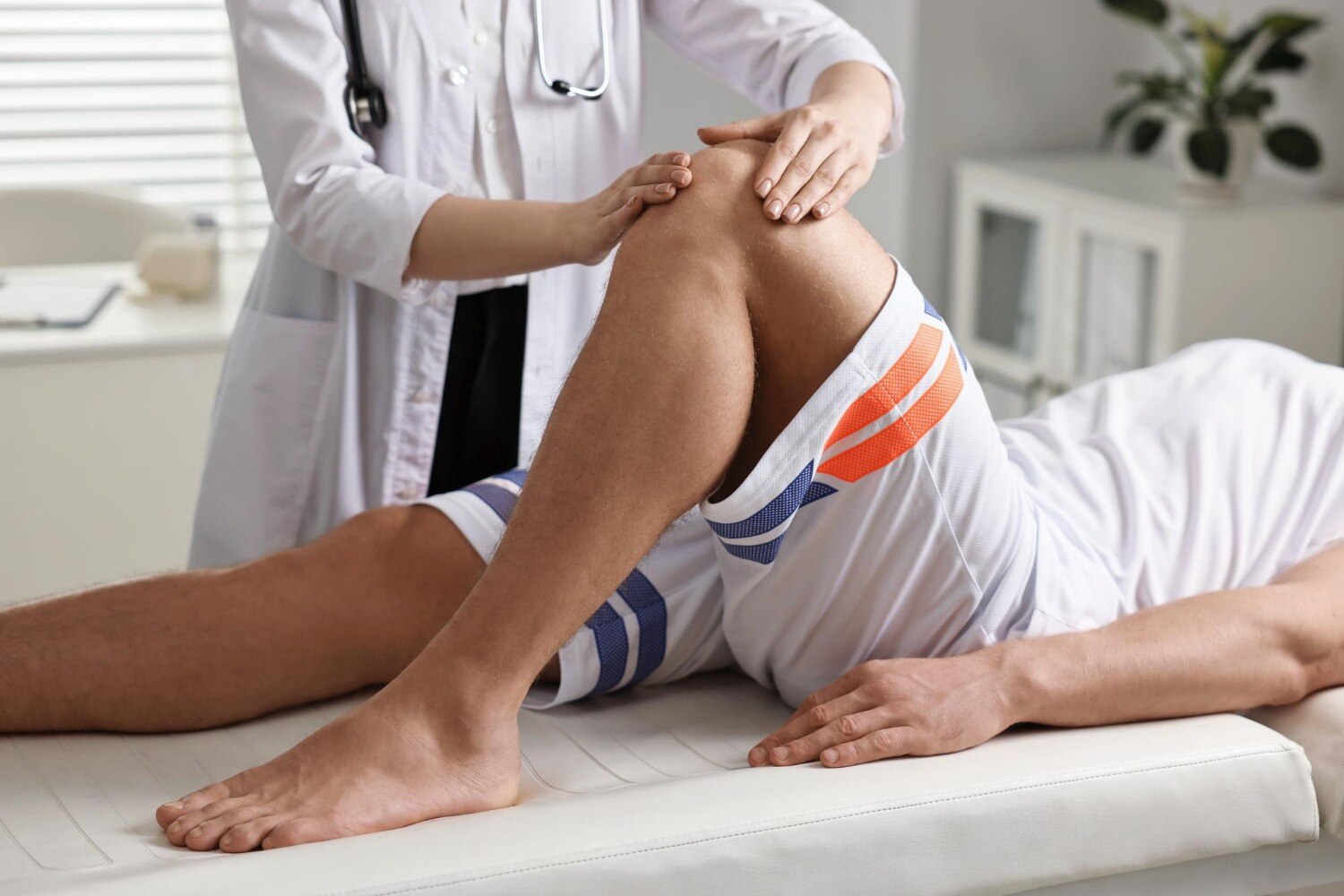
Your sports injury consultation starts with the event: the movement that caused injury, immediate symptoms, previous injuries, training demands and medical history. The clinician then checks swelling, bruising and deformity; feels specific structures; examines circulation, sensation and movement; tests joint stability and strength; and measures range of motion.
For ankle or foot trauma, the Ottawa Ankle Rules and Ottawa Foot Rules guide radiographs. Tenderness at the posterior edge or tip of either malleolus, navicular or base of the fifth metatarsal, or inability to take four steps, supports an X-ray.
| Test | What it shows | When it applies |
|---|---|---|
| X-ray | Bone and alignment | Suspected fracture or dislocation; first-line imaging |
| MRI | Ligaments, cartilage, menisci, many muscle injuries and occult bone injury | Persistent symptoms or suspected soft-tissue or hidden bone damage |
| Ultrasound | Selected tendons during movement | Dynamic tendon assessment |
| CT | Detailed complex bone anatomy | Complicated fracture or surgical planning |
The X-ray versus MRI sports injury decision depends on examination findings, not preference for the more advanced scan. A normal X-ray does not exclude an ACL tear, meniscus injury, tendon damage or stress injury, and it cannot assess concussion or brain function. MRI is not automatically needed at the first visit.
If a fracture, dislocation or major ligament injury is suspected, the clinician prioritises neurovascular checks, pain control, immobilisation when indicated and urgent imaging or reduction. A normal scan does not override worsening symptoms.
Which treatments come before surgery, and when is an operation considered?
Most sports injuries receive activity modification, progressive physiotherapy, bracing or taping before surgery is considered. The aim is controlled recovery, not complete rest until every symptom disappears.
| Option | Main role | Important limit |
|---|---|---|
| Activity modification | Stop painful loading, then resume tolerable movement | Painkillers must not mask symptoms during play |
| Progressive physiotherapy | Restores range of motion, strength, balance, proprioception and sport-specific loading | Skipping rehabilitation increases recurrent-injury risk |
| Bracing or taping | Supports an unstable joint during healing and exercise | It does not replace strength and movement retraining |
| Medicines | Paracetamol or a topical or oral NSAID can reduce pain when medically appropriate | NSAIDs need caution with kidney disease, gastrointestinal bleeding risk, anticoagulants and some cardiovascular conditions |
| Surgery | Repairs, reconstructs or stabilises damaged structures | A tear alone does not make surgery automatic |
Uncomplicated ankle sprains often improve with protected movement and progressive weight-bearing rather than prolonged immobilisation. Ankle sprain rehabilitation should gradually restore motion, calf and leg strength, balance and sport-specific loading; a severe sprain or associated fracture may need brief immobilisation.
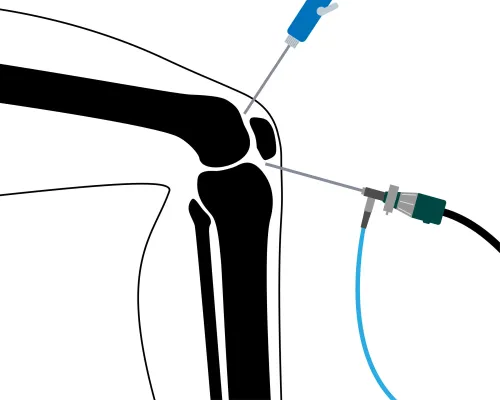
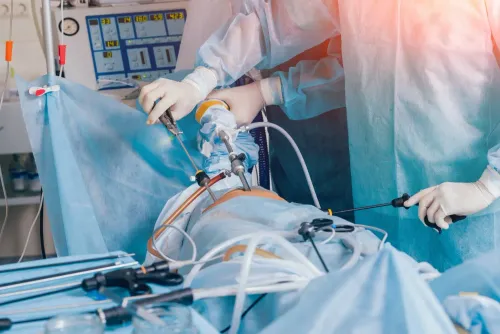
An operation becomes more reasonable when the joint remains unstable, a fracture or other structure is displaced, an associated injury needs treatment, sport or work demands require greater stability, or symptoms persist after well-supervised sports injury physiotherapy. Options include arthroscopy for sports injury, ligament repair, ligament reconstruction and fracture fixation.
The decision also considers the injury pattern and your priorities, not an imaging report alone.
How do you choose a sports-injury hospital, and when can you return to sport?
Choose a sports injury treatment hospital in Pune by checking capability, not its “multispeciality” label. This applies whether you search Dhankawadi, Katraj, Bibwewadi, Kondhwa, Undri, Wanowrie, Swargate or elsewhere in Pune. Maternity, fertility, dermatology and cancer departments do not prove sports-injury expertise.
For any sports injury hospital Dhankawadi or orthopedic hospital near Katraj, verify:
- A named orthopedic or sports-medicine specialist
- 24-hour emergency assessment
- On-site radiography and access to MRI
- Physiotherapy and structured rehabilitation
- Documented infection-control arrangements
- Operating-room access when surgery is needed
- A clear referral and follow-up pathway
Pawar Multispeciality Hospital Dhankawadi, Pune is one local option to verify against these practical criteria rather than choosing by its department list.
Return to sport criteria are based on function, not the calendar.
| Check | What you need | Why it matters |
|---|---|---|
| Range of motion | Pain-free, near-normal movement | Stiffness can alter technique |
| Swelling | Controlled swelling after activity | Persistent swelling signals incomplete recovery |
| Strength | Near-symmetrical strength | Weakness shifts load to another structure |
| Control | Balance, hopping or sport-specific drills without pain | Poor control raises reinjury risk |
| Training load | Progressively harder sessions without renewed symptoms | A full match should not be the first test |
Your surgeon or physiotherapist should set individual clearance criteria. Suspected concussion requires removal from play, assessment and no same-day return, even if symptoms quickly improve.
Related services
Orthopedic Best Sports Injury Treatment Specialist in Dhankawadi, Bibwewadi, Kondhwa, Pune Dr. Gaurav Pawar is one of the leading and best Best Sports Injury Treatment specialist at Pawar Multispeciality Hospital in Dhankawadi, Pune. View service → |
Orthopedic Best Foot, Ankle & Shoulder Treatment Hospital in Dhankawadi, Bibwewadi, Kondhwa, Pune At Pawar Multispeciality Hospital, Dhankawadi, Pune, we specialize in providing advanced and comprehensive care for foot, ankle, and shoulder... View service → |
Frequently asked questions
Should you go to an emergency department or book an orthopedic appointment?
Go to an emergency department if the injury causes deformity, uncontrolled bleeding, numbness, a cold or discoloured limb, loss of movement, head-injury symptoms, or an open wound. Book an orthopedic appointment for stable pain, swelling, sprains, strains, or symptoms that persist or recur without those warning signs.
What should you do during the first 24 hours after a sports injury?
Stop the activity, protect the injured area, apply ice wrapped in cloth for 15 to 20 minutes at a time, use light compression, and elevate the limb. Avoid massage, alcohol, heat, and strenuous exercise during the first day. Seek urgent care if pain, swelling, numbness, or loss of function worsens.
What happens during a sports-injury consultation, and which scan is needed?
The clinician reviews how the injury happened, checks pain, swelling, stability, movement, strength, sensation, and circulation, then chooses imaging based on the findings. X-rays show fractures and dislocations; ultrasound can assess selected tendons and fluid; MRI gives detailed views of ligaments, cartilage, muscles, and tendons.
Which treatments come before surgery, and when is an operation considered?
Treatment can include activity modification, bracing or taping, physiotherapy, prescribed pain relief, and a gradual strengthening programme. Surgery is considered for displaced fractures, complete tendon or ligament tears with instability, injuries that fail appropriate rehabilitation, or damage requiring prompt repair.
How do you choose a sports-injury hospital, and when can you return to sport?
Choose a hospital with orthopedic assessment, appropriate imaging, physiotherapy, emergency support, and a clear follow-up plan. Return when swelling has settled, movement is pain-free, strength and balance are near the uninjured side, sport-specific drills are tolerated, and the treating clinician confirms readiness.
Related service
Orthopedic Best Trauma and Fracture Treatment Hospital in Dhankawadi, Bibwewadi, Kondhwa, Pune When it comes to trauma and fracture management in Pune, Pawar Multispeciality Hospital stands as one of the most trusted centers, led by Dr. View service → |