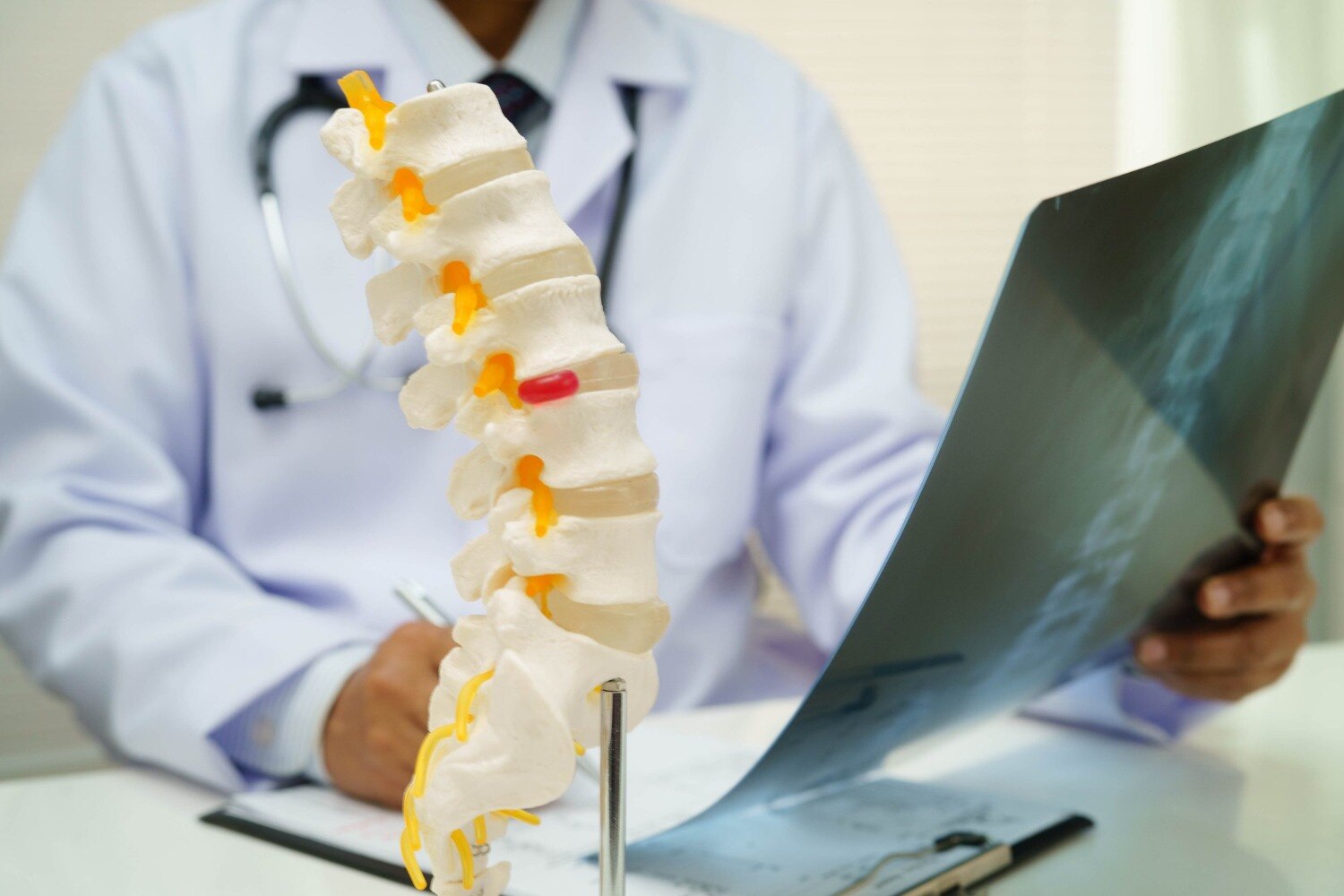
Back pain, leg numbness and an MRI showing a disc problem do not automatically mean you need spine surgery. You will be able to identify urgent symptoms, understand when non-operative care is appropriate, compare procedures and hospitals, and prepare focused questions for a spine consultation.
Key takeaways
- Seek urgent assessment for weakness, bladder changes, fever or loss of coordination.
- Try structured physiotherapy when symptoms are stable and no neurological warning signs exist.
- Compare decompression, discectomy, fusion and fracture procedures for the specific diagnosis.
- Ask about the surgeon’s recommendation, alternatives, complications, recovery and expected follow-up.
Which spine conditions and symptoms need urgent assessment?
A spine specialist may assess a herniated disc, cervical spinal stenosis, lumbar spinal stenosis, spondylolisthesis, scoliosis, spinal fractures, spinal infections and spinal cord compression. Localised back or neck pain, stiffness, or stable arm or leg pain without warning signs often begins with medicines, activity advice, physiotherapy or injections rather than emergency care.
| Presentation | Possible concern | What to do |
|---|---|---|
| Stable pain or tingling without weakness | Herniated disc, scoliosis or stenosis | Arrange a routine specialist assessment; avoid routine MRI unless the result could change treatment. |
| Disabling leg pain or reduced walking | Lumbar spinal stenosis or spondylolisthesis | Seek assessment when symptoms persist despite non-surgical care; surgery requires symptoms and imaging to match. |
| Fever with severe back pain | Spinal infection | Seek same-day medical assessment, especially with chills or feeling acutely unwell. |
| New weakness, loss of bladder or bowel control, or numbness around the groin | Cauda equina syndrome or spinal cord compression | Go to an emergency department for urgent examination, rapid MRI and surgical referral. |
| Severe pain after a major fall or collision | Spinal fracture or cord injury | Go to an emergency department; do not drive if weakness or numbness is present. |
An MRI finding alone does not prove that surgery is needed. Rapidly worsening weakness, new urinary retention or incontinence, saddle numbness, or symptoms after major trauma require emergency assessment rather than a routine appointment.
When is physiotherapy enough, and when can surgery make sense?
Physiotherapy is enough when symptoms improve, strength and sensation remain normal, and you can return gradually to daily activity. Nonoperative spine treatment may include medicines, activity advice, supervised physiotherapy or an injection, depending on the diagnosis.
A surgeon weighs these findings together:
- Neurological examination: worsening weakness, reduced reflexes or spreading numbness raises concern for nerve or spinal-cord compression.
- Symptom duration: persistent or progressive leg pain, numbness or walking limitation after an appropriate treatment period deserves reassessment.
- Treatment response: surgery becomes more reasonable when structured care fails to restore function or control disabling nerve pain.
- Imaging match: MRI findings must correspond to your symptoms and examination, not merely appear on a report.
- Structural evidence: standing X-rays show alignment, movement-related instability and slippage; CT scans define bone detail and fractures.
An MRI disc bulge or narrowed canal alone is not a surgical indication. Many people have painless abnormalities, while most nonspecific low-back pain does not arise from a surgically correctable problem.
Surgery makes sense when the diagnosis is clear, symptoms are function-limiting or worsening, nonoperative care has been properly tried, and the expected benefit outweighs risks. New weakness or loss of bladder or bowel control requires urgent assessment rather than routine physiotherapy.
Which spine operations should you compare before consenting?
The operation must match the pain source, spinal level and mechanical problem—not an MRI image alone. Ask whether the target is cervical, thoracic or lumbar, and whether the procedure relieves nerve or cord pressure, stabilises bone, or treats a fracture.
| Option | Purpose, level and trade-off |
|---|---|
| Discectomy or microdiscectomy | Removes herniated disc material, usually in the cervical or lumbar spine, to free a nerve. It preserves motion but does not correct instability. |
| Decompression or laminectomy | Removes bone or ligament causing stenosis around lumbar or cervical nerves or the cord. It may relieve symptoms but can worsen instability. |
| Spinal fusion with instrumentation | Joins vertebrae and uses screws, rods or plates for instability, deformity, fracture or recurrent compression. It offers stability but sacrifices motion and requires implant follow-up. |
| Vertebroplasty | Injects cement into a painful osteoporotic vertebral compression fracture, usually thoracic or lumbar. Cement leakage is a key risk. |
| Kyphoplasty | Expands a balloon before cement injection to restore some height in a thoracic or lumbar compression fracture; it costs more surgical steps and still carries leakage risk. |
Open surgery gives wider exposure; minimally invasive surgery uses smaller access but still has risks and may not suit complex disease. Emergency decompression takes priority for cord or cauda equina compression, major weakness, infection, malignancy or unstable trauma.
What risks, preparation and recovery should you plan for?
Plan for complications, medical optimisation and staged recovery; advanced technology does not remove risk. Nerve injury, infection, blood clots, wound problems, dural tear and cerebrospinal-fluid leak can occur. Fusion also carries a risk of non-union after fusion, persistent pain or further surgery.
Before admission, confirm that the diagnosis matches your symptoms, examination and imaging. Share every medicine and supplement, especially blood thinners; never stop one without the prescribing doctor’s plan. Ask about blood tests, anaesthesia review, pain medicines, and how smoking, diabetes and osteoporosis will be managed.
After an uncomplicated operation, walking often begins the same or next day. Rehabilitation then focuses on wound care, safe movement, strength and spinal protection. Arrange help at home, avoid lifting or driving until cleared, and expect work restrictions based on the operation and your job rather than a fixed date.
Contact the surgical team urgently for:
- New or worsening limb weakness, loss of bladder or bowel control, or numbness around the groin
- Fever, spreading redness, pus or increasing wound pain
- Severe headache with clear wound drainage
- Calf swelling, chest pain or breathing difficulty
- Sudden severe pain, a fall, or worsening numbness
How do you compare a spine surgery hospital in Pune’s southern neighbourhoods?
Compare verified capability, not distance or an accreditation logo. A spine surgery hospital in Dhankawadi, Katraj Bibwewadi Kondhwa Undri Wanowrie Swargate Pune should show who manages routine cases and who responds when a fracture, infection or cord compression deteriorates overnight.
| Capability | What to verify | Why it matters |
|---|---|---|
| Spine service | Discectomy, decompression, fusion, instrumentation, vertebroplasty and kyphoplasty for cervical and lumbar conditions | A general operation list may not cover your diagnosis |
| Emergency support | 24-hour trauma coverage, neurosurgical backup and intensive care | Weakness or spinal instability can require rapid escalation |
| Diagnostics | On-site CT, timely MRI, radiologist image review and specialist follow-up | An MRI report alone does not choose an operation |
| Implants | Manufacturer, model, batch or lot number, invoice and implant card | Traceability supports recalls and future treatment |
| Recovery | Infection-control process, wound review, neurological checks, physiotherapy and discharge plan | Surgery without rehabilitation leaves avoidable gaps |
Ask for the named surgeon’s relevant procedure experience, complication and reoperation policy, blood-bank and anaesthesia arrangements, and referral links for vascular, oncology or infectious-disease care. Confirm the complete estimate: surgeon, theatre, implants, room, imaging, medicines, physiotherapy and readmission fees; then ask your insurer for written pre-authorisation and exclusions.
Pawar Multispeciality Hospital Dhankawadi, Pune is one option to assess against this checklist, not a substitute for checking each service directly. A nearby hospital reduces travel, but it does not prove full trauma coverage or guarantee transfer access from every southern neighbourhood.
Related service
Orthopedic Best Spine Surgery Hospital in Dhankawadi, Bibwewadi, Kondhwa, Pune At Pawar Multispeciality Hospital, Pune, we specialize in advanced and comprehensive spine surgery treatments led by Dr. View service → |
What should you ask the surgeon before choosing surgery?
Ask Dr. Gaurav Pawar or any spine surgeon to connect your diagnosis to your symptoms, examination and imaging—not to the MRI report alone. Use this checklist during a spine surgeon consultation:
- What is the diagnosis, and which exact level is causing the problem: cervical, thoracic or lumbar?
- Which operation do you recommend, and what happens if I choose medicines, physiotherapy, injections, observation or no surgery?
- Is decompression enough, or do I need fusion and instrumentation? Why?
- Do I need an implant? Ask about implant selection, material, manufacturer, batch documentation, expected lifespan and added risks.
- What improvement is realistic: pain, numbness, weakness, walking distance or sleep? Which symptoms may remain?
- What are the risks of nerve injury, infection, blood clots, dural tear, non-union, reoperation and adjacent-level disease?
- What restrictions and milestones apply to bathing, wound review, rehabilitation, return to work and driving?
- Who handles postoperative pain, neurological changes and wound problems, and when are follow-up visits scheduled?
- When should I seek a second opinion for spinal fusion, and which records or scans should I take?
Compare the recommendation with these decision points:
| Question | Strong answer | Warning sign |
|---|---|---|
| Diagnosis | Names symptoms, examination and level | Relies on MRI wording alone |
| Alternatives | Explains benefits and trade-offs | Dismisses non-operative care |
| Follow-up | Gives dates and emergency contacts | No written recovery plan |
Frequently asked questions
Which spine conditions and symptoms need urgent assessment?
Seek urgent assessment for new or worsening limb weakness, loss of coordination, saddle numbness, bladder or bowel changes, fever with severe back pain, or symptoms after significant trauma. These signs can indicate spinal cord or nerve compression, infection or fracture.
When is physiotherapy enough, and when can surgery make sense?
Stable pain without neurological warning signs often starts with medicines, activity changes, physiotherapy or injections. Surgery becomes a consideration when imaging matches persistent nerve symptoms, progressive weakness, spinal instability, severe stenosis, fracture, infection or cord compression.
Which spine operations should you compare before consenting?
Ask which procedure fits your diagnosis, including decompression, microdiscectomy, laminectomy, spinal fusion, deformity correction or fracture stabilisation. Compare the goal, alternatives, expected benefit, risks and recovery for each option.
What risks, preparation and recovery should you plan for?
Discuss infection, bleeding, blood clots, nerve injury, anaesthesia complications, persistent symptoms, recurrent disc problems and the possibility of further surgery. Confirm medication instructions, smoking risks, required scans, home support, walking limits, wound care and follow-up.
How do you compare a spine surgery hospital in Pune’s southern neighbourhoods?
Compare the relevant spine specialist, imaging access, anaesthesia and emergency support, infection-control practices, rehabilitation planning, ICU availability when needed, transparent estimates and follow-up arrangements. Check whether the hospital treats your specific condition regularly.